

If you’re new to the world of SIM racing, you might be wondering: can I just use a regular gaming PC, or do I need something built specifically for SIM racing?
On the surface, the two may look the same — both have powerful CPUs, GPUs, and plenty of RAM. But once you dive deeper, the performance demands of modern SIM titles like iRacing, Assetto Corsa Competizione, rFactor 2, EA WRC, and Dirt Rally 2.0 can push hardware in ways that other games don’t.
Let’s break down the key differences between a standard gaming PC and one designed for SIM racing, so you know what to prioritize before making your next big purchase.

Display Demands Are Different
Gaming PC:
Most gaming PCs are designed to run a single 1080p or 1440p monitor at high frame rates. Even when 4K is involved, it’s usually just one display to power.
SIM Racing PC:
SIM racers often run triple monitor setups, ultrawide displays, or VR headsets — all of which massively increase the pixel count. A triple 1440p setup pushes three times the pixels of a single 1440p screen. VR requires 90+ FPS per eye, with consistent frame pacing to avoid motion sickness.
Takeaway: If you plan on triples, a 49” ultrawide, or VR, your PC needs much more GPU horsepower than a general gaming setup.
Framerates Matter More in SIM Racing
Gaming PC:
Many popular titles play smoothly at 60–90 FPS. Some competitive FPS players push 144Hz or 240Hz, but that’s more about reaction times.
SIM Racing PC:
Fluid motion is directly tied to control and consistency. Racing at 120Hz or higher allows for more precise steering, braking, and car control. A drop in framerate mid-corner can cause missed braking points or overcorrection.
Takeaway: A SIM racing PC should aim for stable high framerates (ideally 120+ FPS), not just “playable” performance.
CPU vs GPU Priorities
Gaming PC:
Many AAA games are GPU-bound, meaning you can get away with a mid-range CPU if your GPU is strong.
SIM Racing PC:
SIM titles often lean heavily on the CPU to calculate physics, AI opponents, tire models, and real-time telemetry. For example, iRacing and ACC both benefit from strong single-core CPU performance. Pairing a high-clock CPU with a powerful GPU is essential.
Takeaway: A balanced build is more important for SIM racing than just maxing out the graphics card.
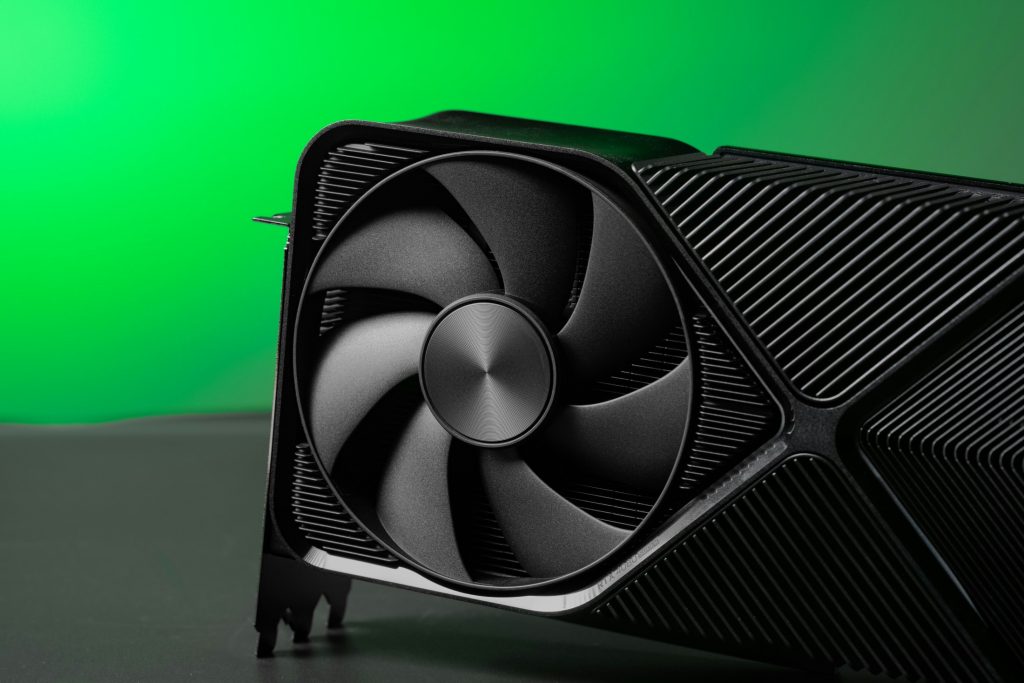
Space and Cooling Considerations
Gaming PC:
A gaming PC can be mid-tower or even small form factor, as long as cooling is adequate for occasional gaming sessions.
SIM Racing PC:
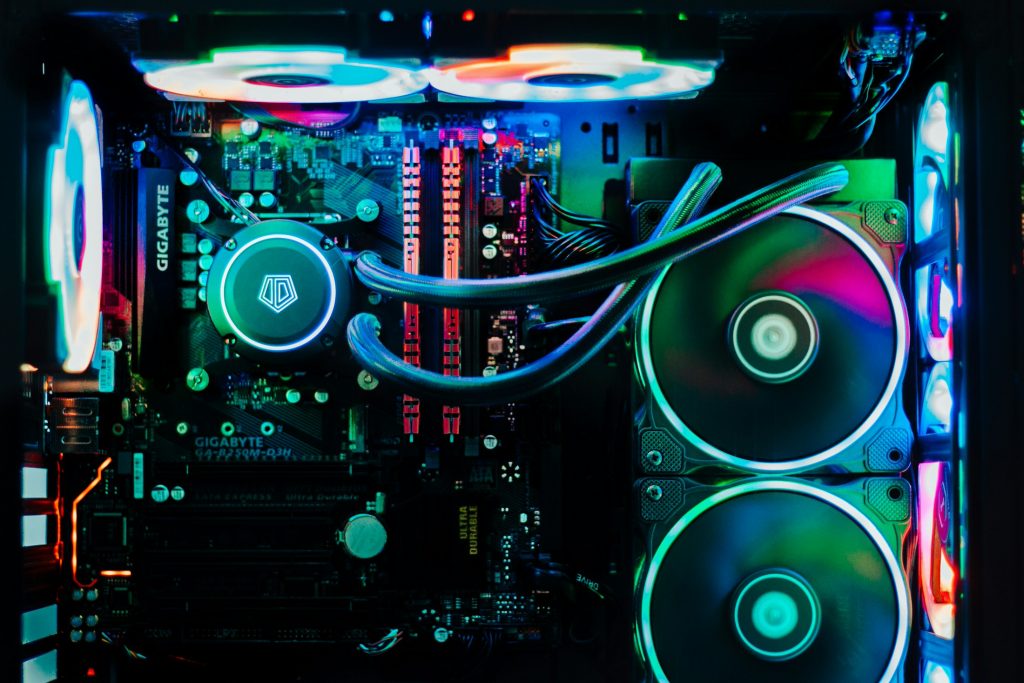
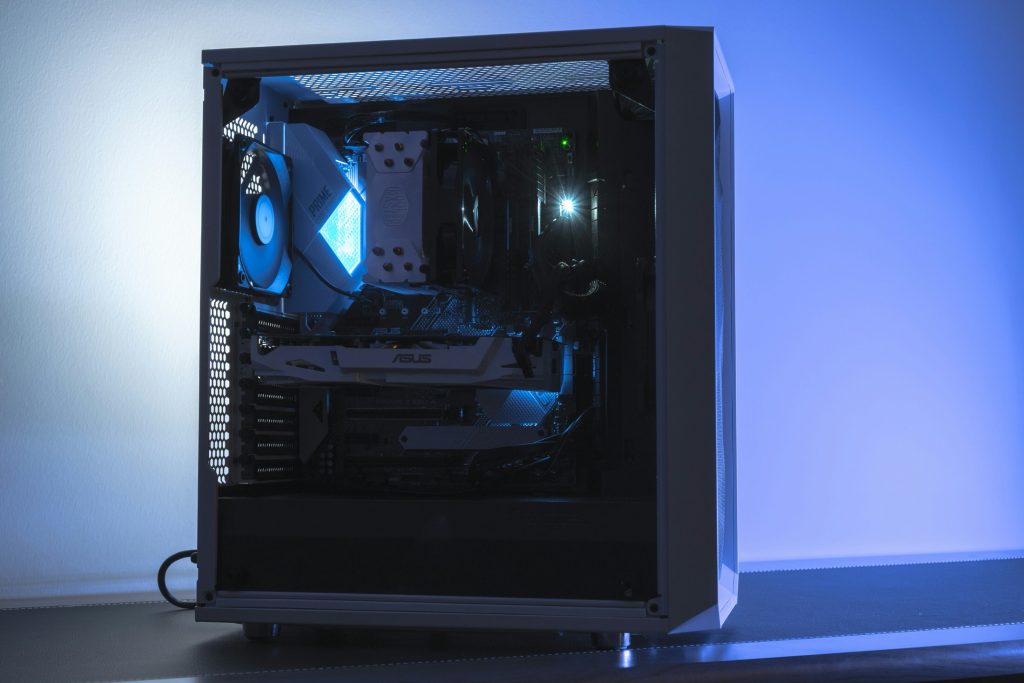
If you’re running triple monitors or VR, your PC will be under heavy load for hours at a time. A well-ventilated case with strong cooling (liquid or high-airflow fans) becomes critical. Endurance races demand stability, not just peak performance.
Takeaway: SIM racing PCs should be built with longevity in mind — think higher-capacity power supplies, stronger cooling, and room for future GPU upgrades.
Budget Priorities
Gaming PC:
Budgets often focus on aesthetics (RGB, tempered glass, custom cabling) or raw GPU performance.
SIM Racing PC:
Budget should prioritize GPU, CPU, cooling, and monitor/VR support. RGB lights won’t help you hit your braking point any faster.
Takeaway: A SIM racing PC is about performance first, looks second.
Example Budget Tiers for SIM Racing PCs
To make this practical, here are three sample PC budget tiers and what you can expect at each level.
Entry-Level SIM Racing PC (~$1,500)
- CPU: Intel i5 or AMD Ryzen 5
- GPU: NVIDIA RTX 4060 Ti / 4070
- RAM: 16–32GB DDR5
- Storage: 1TB NVMe SSD
- Performance Target:
- Single 1080p or 1440p monitor at 120–144Hz
- Light VR possible, but not ideal
- Good for iRacing, rFactor 2, and older titles at medium-high settings
Best for: New sim racers on a budget who want to get started with solid performance and upgrade later.
Mid-Range SIM Racing PC (~$2,500)
- CPU: Intel i7 / AMD Ryzen 7
- GPU: NVIDIA RTX 4070 Ti / 4080
- RAM: 32GB DDR5
- Storage: 1TB–2TB NVMe SSD
- Performance Target:
- Triple 1440p monitors at 120Hz+
- Smooth ultrawide performance (5120×1440)
- VR capable (Meta Quest 3, HP Reverb G2) with high settings
Best for: Enthusiasts who want a balanced, future-proof PC that handles modern SIMs at high quality.
High-End SIM Racing PC (~$5,000+)
- CPU: Intel i9 / AMD Ryzen 9
- GPU: NVIDIA RTX 4090
- RAM: 64GB DDR5
- Storage: 2TB+ NVMe SSD, optional secondary drives for replays/data
- Cooling: Custom liquid or high-end air
- Performance Target:
- Triple 4K monitors or 1440p triples at ultra settings
- Premium VR headsets (Varjo Aero, Pimax Crystal) at consistent 90–120 FPS
- Handles endurance events, streaming, and telemetry without slowdowns
Best for: Dedicated SIM racers and professionals who want the ultimate no-compromise setup.

Final Thoughts
A SIM racing PC is, at its core, still a gaming PC — but with different priorities. Instead of chasing flashy cases or raw GPU numbers, a SIM racing PC is all about consistent high frame rates, stable performance, and the ability to power demanding display setups like triples or VR.
If you’re planning to get serious about SIM racing, don’t just buy any gaming PC off the shelf. Think about your display choice, the games you’ll be playing, and how much headroom you want for the future.
At Sim Racing Works, we help racers choose, build, and configure PCs designed specifically for SIM racing — whether that means triple monitors, ultrawide OLED, or VR. Get started here.